
How We Paint
How We Paint
“If, seeking merit, one makes a maṇḍala in accordance with the Dharma, that great bodhisattva will be born in a pure land.”
Many Kinds of Buddhist Images
The atelier paints many kinds of Buddhist images: scenes from the life of the Buddha, pictorial renderings of the sūtras, contemplation images that give visual form to the teachings, principal deities for meditative practice and the many maṇḍalas of esoteric Buddhism, as well as portraits of patriarchs and of contemporary monastics.
Each kind of image has its own religious use and lineage background. Before painting begins, the atelier first learns why the work is being made and where it will be enshrined, and then studies the scriptures and ritual manuals, the traditional iconography and the requirements of the relevant lineage, so that the work answers to the patron’s aspiration and actual needs.
Below, using a Star Maṇḍala as an example, we describe our process: researching the texts and images, preparing the line drawing, applying color, and mounting the painting for use.
Painting a Star Maṇḍala
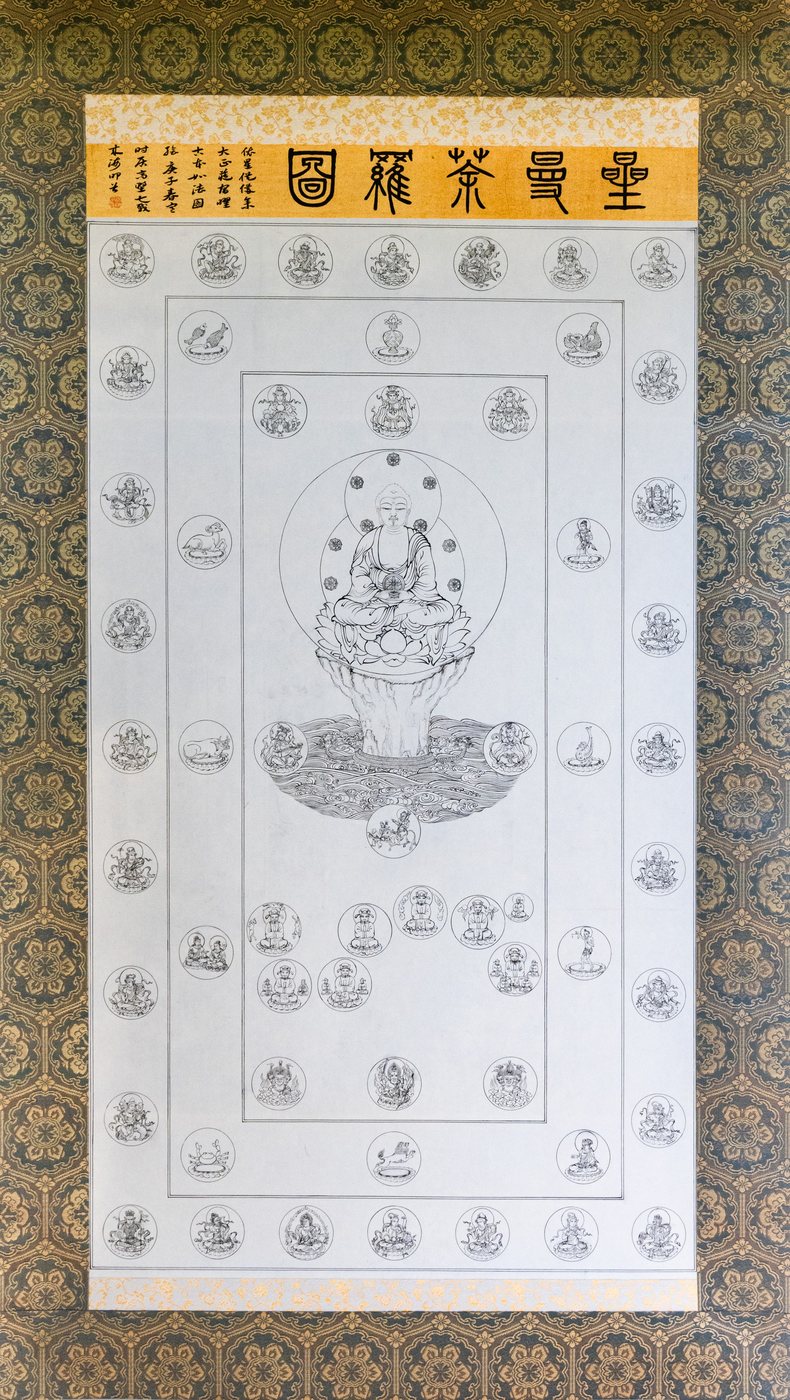
The Star Maṇḍala, also called the Northern Dipper Maṇḍala, is the principal image used in the esoteric rite of offerings to the stellar deities. At its center is usually Śākyamuni of the Golden Wheel—the One-Syllable Golden Wheel (Ekākṣara-uṣṇīṣacakra) in the form of Śākyamuni. Around the central figure are the stellar deities: the seven stars of the Northern Dipper, the nine luminaries, the twelve zodiac signs and the twenty-eight lunar mansions. The rite is performed to pray for protection from calamity and for long life.
Each of the dozens of stellar deities in this maṇḍala has its own form and features, so each must be checked against the scriptures and the traditional iconography, and confirmed as correct, before the first brushstroke. This care is not only for accuracy of form; it comes from respect for the teaching, for the lineage, and for those who will actually use the maṇḍala.
Throughout the work, the atelier also attends to the life of the line, the depth of the color and the dignity of the whole, so that the work may serve as a true support for practice and naturally awaken reverence in those who see it.
Checking Each Deity’s Sources
 © Maṇḍala Atelier Udayanāraṇya
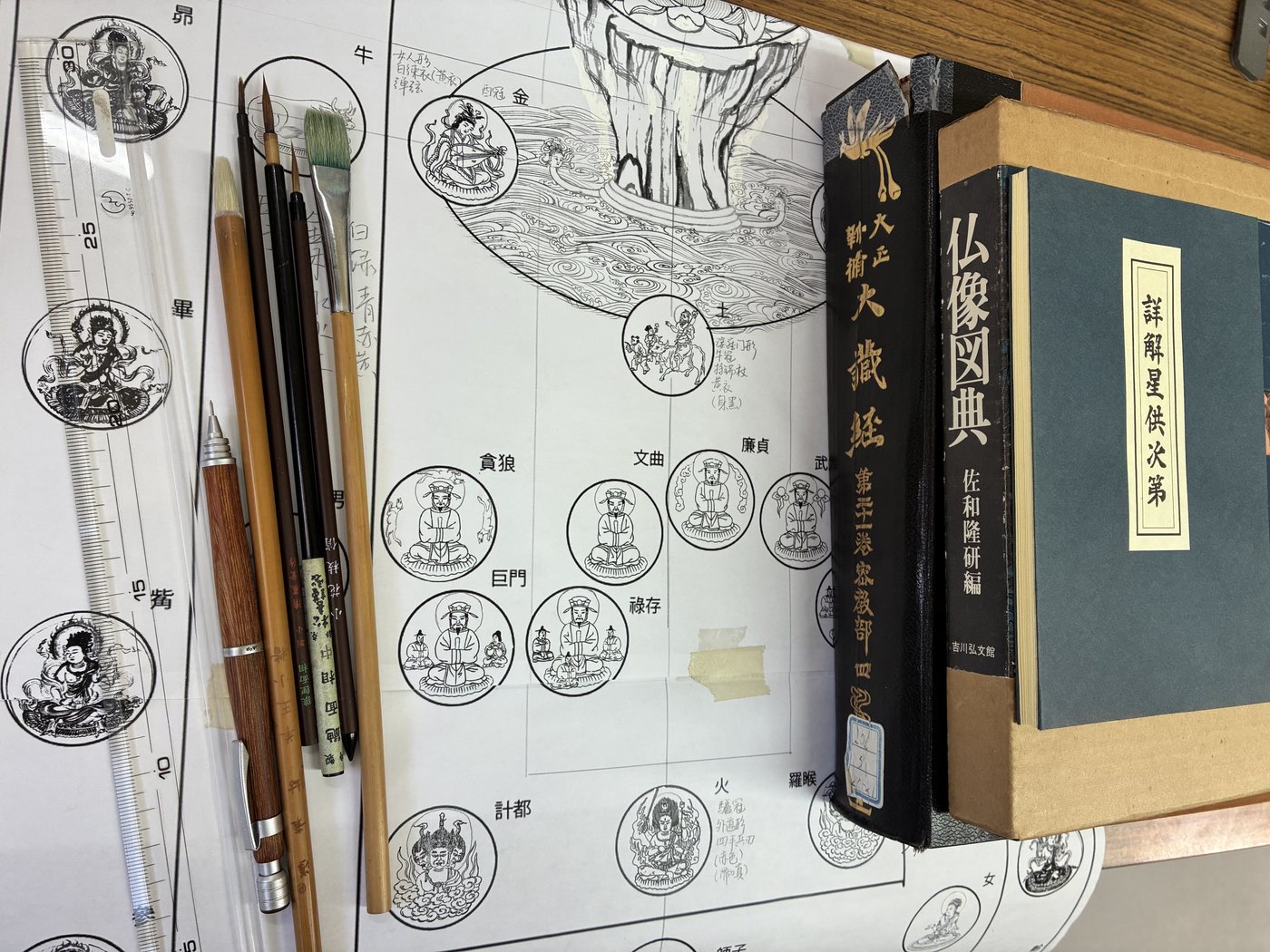
We consult the scriptures and ritual manuals in the esoteric section of the Taishō canon, iconographic works through the ages, and modern dictionaries of Buddhism and esoteric Buddhism, confirming for each deity its position, form, mudrā, attributes, colors, retinue and other details.
Setting Out the Composition
 © Maṇḍala Atelier Udayanāraṇya
Based on this research, we arrange the composition and draw the line drawing with a brush, checking the form, proportions, direction and color assignment of each deity, and revising until the whole structure is accurate.
Adorning with Pigment
 © Maṇḍala Atelier Udayanāraṇya
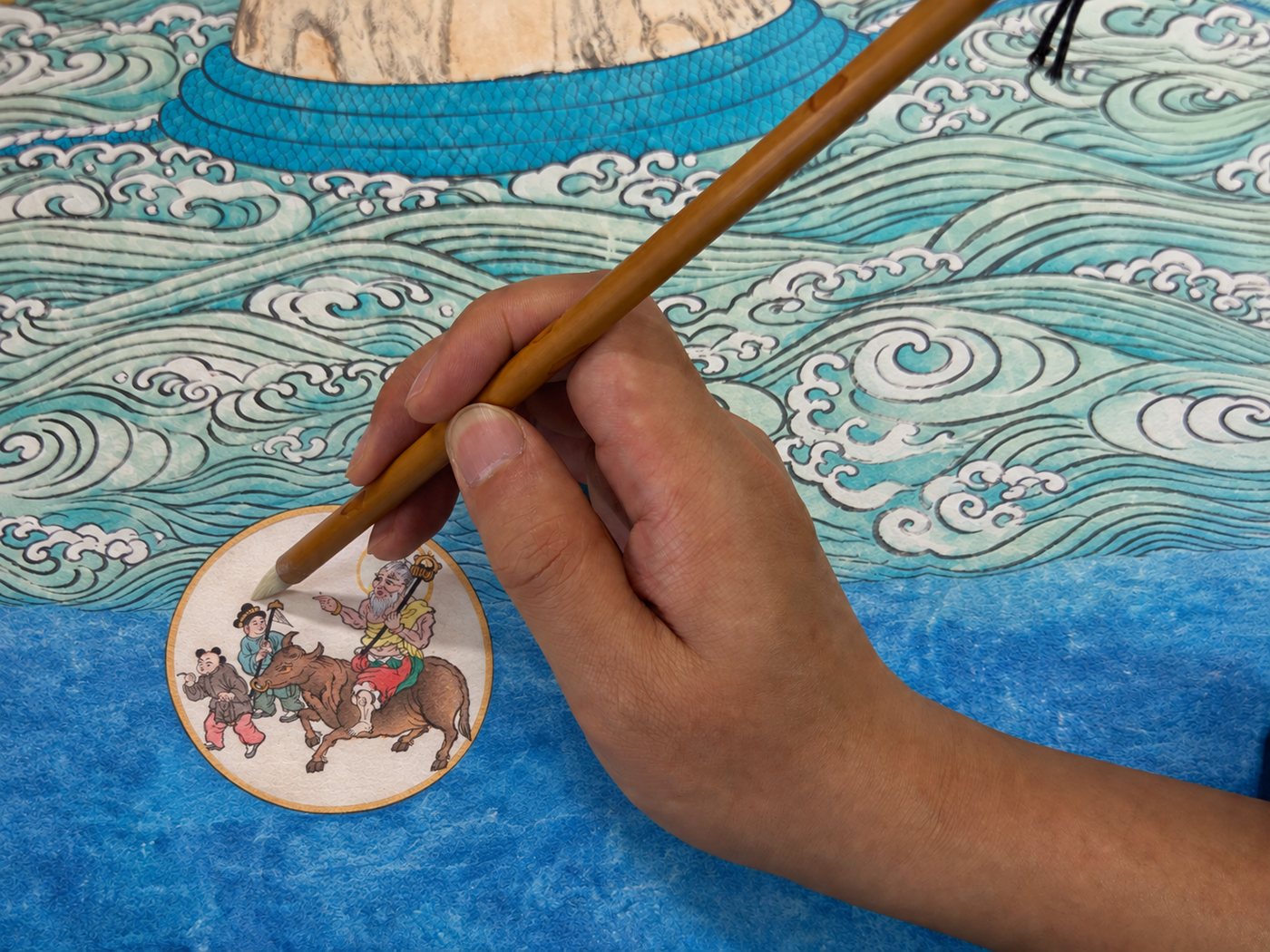
Colors are determined according to the descriptions in the scriptures, ritual manuals and traditional iconography. Using brushes and mineral pigments on silk (or on paper or wood), the colors are applied, shading is built up and details are refined, and the finished image is checked once more as a whole. Where there is no clear textual basis, artistic choices are made with care, within the norms of the iconography and without detracting from the dignity of the whole.
Ready for the Rite
 © Maṇḍala Atelier UdayanāraṇyaPublished with the temple’s consent
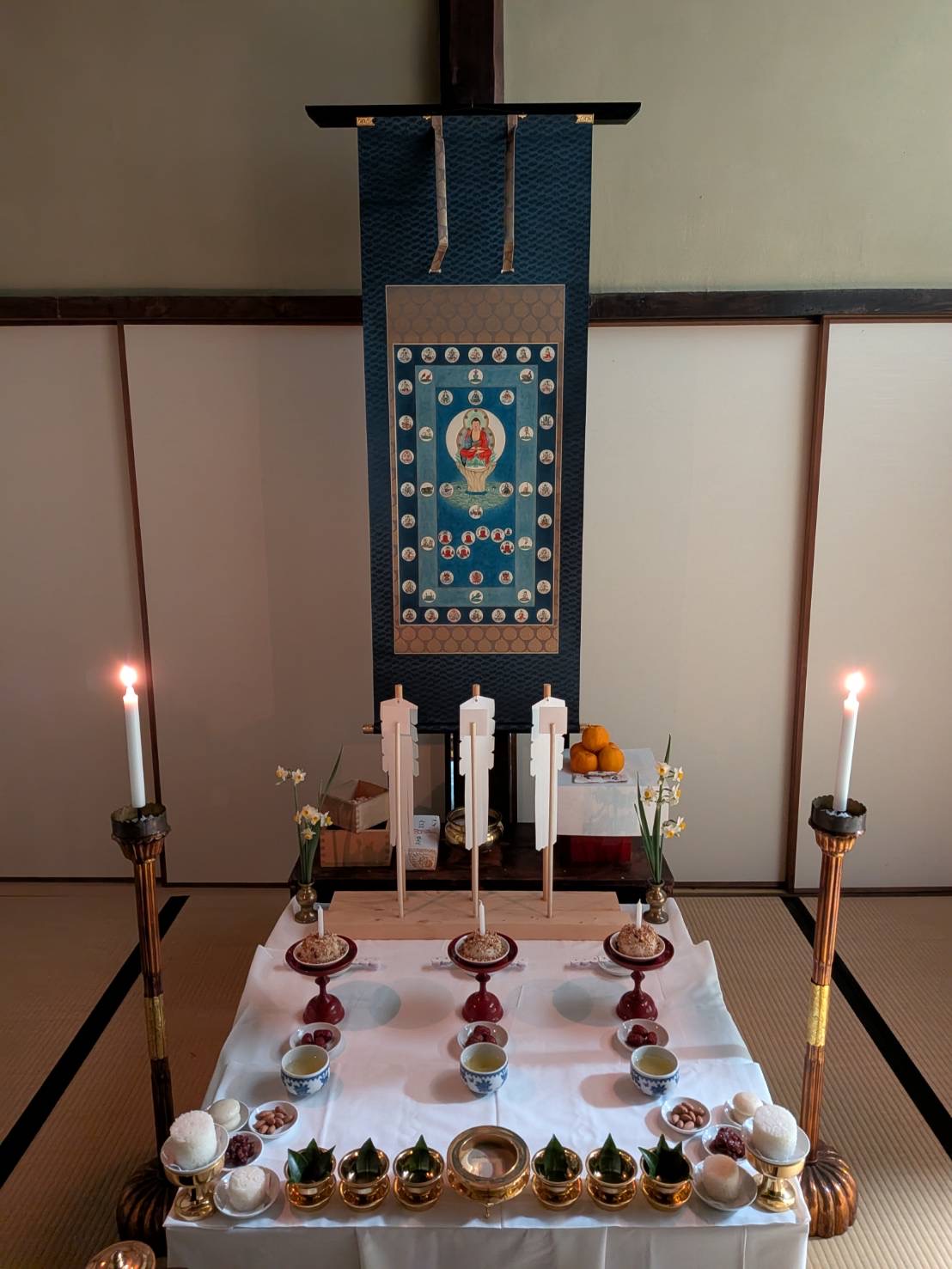
The mounting is chosen according to how the temple or practitioner will actually use the work, so that it can finally serve in a Dharma assembly, in practice or in another suitable setting.